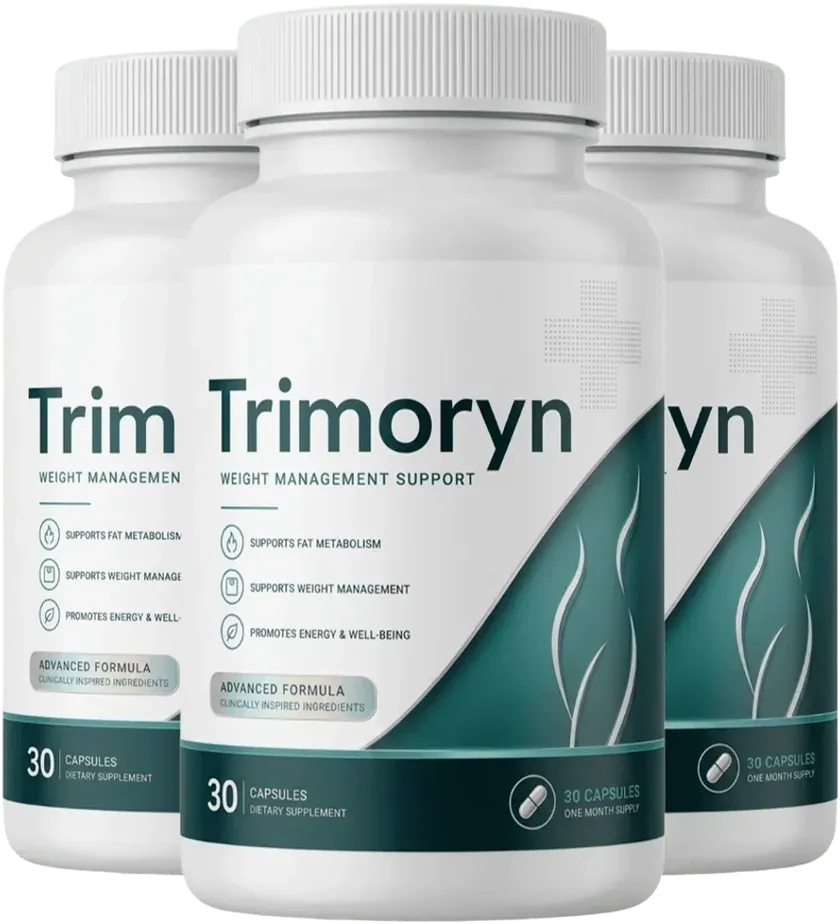
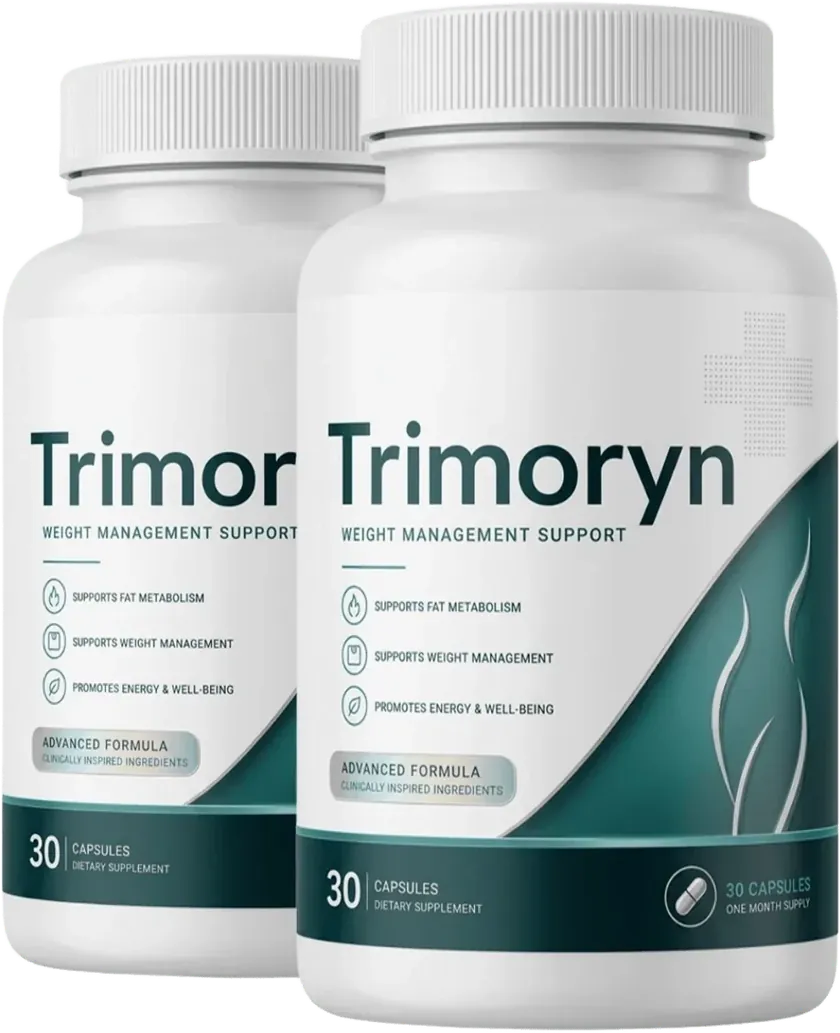
Trimoryn Guides
Two explainers, three blog posts and five deep-dive pages, all in one place. Start with the extract-ratio guide if a 10:1 or 4:1 number on the label confuses you, or the fiber-and-water guide if you want the reasoning behind the glucomannan advice. Everything links from here.
What this hub is for
This page is a map, not a new argument. Every long explainer this site has published lives here in one place, grouped by what kind of reading it is: a standalone guide, a shorter blog post, or one of the deep pages that break down a single part of the label in detail.
Nothing below repeats the others word for word. Each entry gets a short, honest summary of what it actually covers, so you can pick the one that answers your question instead of reading all of them.
Why these pages exist at all
Every guide, post and deep page linked below exists because a single fact about this label needs more room than a sentence. “Extract 10:1” is one sentence. What it means for how much cinnamon bark actually ends up in the capsule takes a full explainer to work through properly, the same way the EU’s glucomannan health claim, written around 3 grams a day EFSA et al., 2010, needs its own space next to the roughly 45 mg on this label rather than a passing mention. A sentence can state a number; only a full page can show what that number means once it sits beside the research it gets compared to.
None of these pages exist to make the product look better or worse than it is. They exist because the label prints real numbers, and real numbers deserve a real explanation instead of being rounded off in either direction. Reading one of them takes a few minutes; guessing at what a ratio or a percentage means takes no time at all, and gets the number wrong more often than not.
The two standalone guides
What 4:1 and 10:1 Actually Mean
Extract ratios like the prickly pear 4:1 and the cinnamon 10:1 on this label describe concentration, not dose. This guide walks through how to convert a ratio back to a raw-plant equivalent, and why cinnamon is the one line on this panel where that math actually lands near a studied amount.
Read the guide →Fiber Supplements and Water
Konjac glucomannan swells on contact with liquid, which is why every fiber capsule, this one included, comes with a full-glass-of-water rule. This guide covers where that advice comes from, what happens when it is ignored, and why the amount in one Trimoryn capsule is still small next to the doses tied to case reports.
Read the guide →From the blog
What 1,470% Daily Value Actually Means
The only percentage on this panel belongs to riboflavin. This post unpacks why a Daily Value can run that high with no safety concern attached, and why a big percentage on one line says nothing about the ten lines that carry none at all, since most of them simply have no established Daily Value to measure against.
Read the post →Akkermansia, the Newest Gut Strain
Akkermansia muciniphila is one of the two live cultures on this label, and one of the newer probiotic ingredients on any shelf. This post covers what the one human pilot trial actually found, how its dose compares with the 1 billion CFU here, and why the label does not say whether this one is live or pasteurized.
Read the post →Before a Meal or With Food?
The label says 15 to 30 minutes before a meal, not with it. This post explains the practical difference, why that window exists mainly for the fiber ingredient rather than to boost any effect from the rest of the formula, and what changes if a meal runs later than planned.
Read the post →The deep pages on this site
What Is Actually in the Capsule
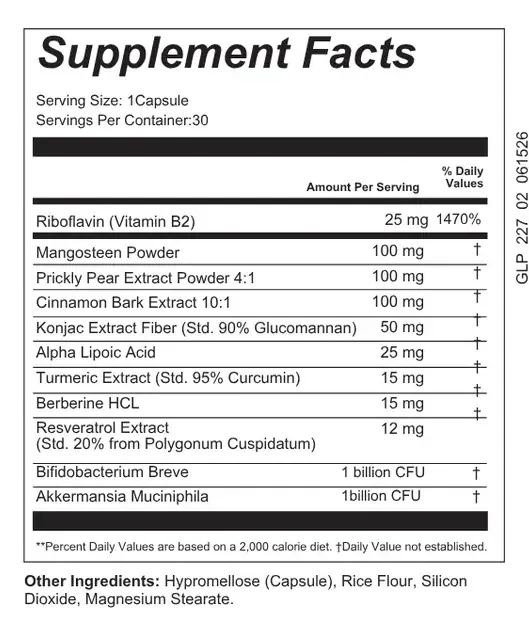
All eleven ingredients, their printed amounts, and the five the marketing artwork leaves out of its own graphics. Each ingredient gets its own dose comparison against the research cited for it, so the gap is visible line by line.
Read the page →How It Works
What each ingredient is meant to do in the body, and a second dose-ladder comparison built for this page alone, separate from the one used on the home page and the ingredients page.
Read the page →The Supplement Facts Panel
A line-by-line walk through the back-of-bottle panel, including the capsule bar chart of all 442 weighed milligrams and what the panel's percent Daily Value column does and does not tell you.
Read the page →Side Effects and Interactions
Every interaction we could source and confirm, led by berberine's effect on CYP450 enzymes and blood sugar medicine, plus the smaller notes on turmeric, alpha lipoic acid and the two live cultures.
Read the page →Testing and Quality
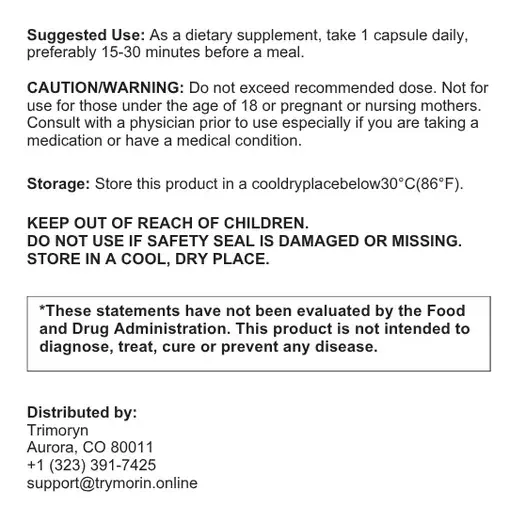
What the seals on the bottle do and do not prove, and what is missing: certificate numbers, auditors, and a named clinician behind the Doctor Developed mark.
Read the page →Two more pages worth reading in full
Two pages this hub does not replace
The routine questions, dose, timing, missed days, and a realistic timeline for results, get their own full pages rather than a summary card here, because they are the two most-read pages on this site and deserve the full explanation.
How to take Trimoryn covers the daily routine end to end, including the water rule and what a missed day means. The results timeline covers what to expect, and the honest gap between the 60-day refund window and the 8 to 24 week research timescale behind these ingredients.
A reading order, if you want one
New to this label
Start with the ingredients page for the full list and amounts, then read the extract-ratios guide to make sense of the 4:1 and 10:1 lines.
Already taking it
Read how to take it for the routine, then the fiber-and-water guide for why the water rule matters.
Weighing a medicine question
Go straight to side effects and interactions, since that page gathers every sourced interaction in one place rather than spreading them across the guides.
Deciding whether to keep taking it
Read the results timeline alongside testing and quality to weigh what the seals prove against how long the research actually takes.
Find the right page by your question
| Your question | Where to go |
|---|---|
| What does a 10:1 extract ratio actually mean? | The extract-ratios guide |
| Why does this capsule need a full glass of water? | The fiber-and-water guide |
| Why is one ingredient's percentage so high? | The 1,470% Daily Value blog post |
| What is this newer probiotic ingredient? | The Akkermansia blog post |
| Should I take it before or with a meal? | The before-a-meal blog post |
| What exactly is in one capsule? | The ingredients page |
| What is each ingredient supposed to do? | The how it works page |
| What does the back-of-bottle panel actually say? | The Supplement Facts page |
| What could interact with my medicine? | The side effects page |
| What do the seals on the bottle prove? | The testing and quality page |
What is here, and what comes next
This hub will grow as more of the label needs its own explainer. For now, ten pages cover the questions we hear most: two standalone guides on the numbers that confuse people, three shorter blog posts on specific label lines, and five deep pages that each take one part of the bottle and go through it in full.
If a question is not answered anywhere linked here, the FAQ page is the next place to check, and the order desk can answer anything specific to your own order.
Guides: common questions
What is the difference between a guide and a blog post here?
A guide is a standalone deep dive on one topic, like extract ratios. A blog post is shorter and tied to a single question, like the 1,470% Daily Value line.
Where do I start if I am confused by 4:1 or 10:1 on the label?
Start with the extract-ratios guide. It converts those ratios back into a raw-plant equivalent so the numbers mean something.
Why does the label say to take this with a full glass of water?
The fiber-and-water guide explains the glucomannan swelling issue behind that instruction in full, with the sourcing behind it.
Is there a page just about safety and interactions?
Yes. The side effects page lists every interaction we could source and confirm, led by berberine and blood sugar medicine.
Where is the daily routine explained?
On the how to take Trimoryn page, covering dose, timing, water and what a missed day means.
Is there a page about how long results take?
Yes, the results timeline page, including the honest gap between the refund window and the research timescale.
Do these guides repeat each other?
No. Each one is written to cover a distinct question, and this hub exists so you can pick the right one instead of reading all of them.
What is the quickest way to find the right page?
Use the quick-finder table on this page, which matches common questions to the page that actually answers them.
Keep reading
What Is Actually in the Capsule
All eleven printed amounts, and the five the marketing art leaves out.
Read →How to Take Trimoryn
The daily routine: dose, timing, water, and what a missed day means.
Read →Side Effects and Interactions
Every interaction we could source, led by berberine and blood sugar medicine.
Read →Order Trimoryn from the authorized retailer
60 servings per bottle, 1 to 2 droppers a day. Kits of 2, 3 or 6 bottles run from $49 a bottle on the sales page, with a 60-day money-back guarantee. Questions first? Call +1 (323) 391-7425.