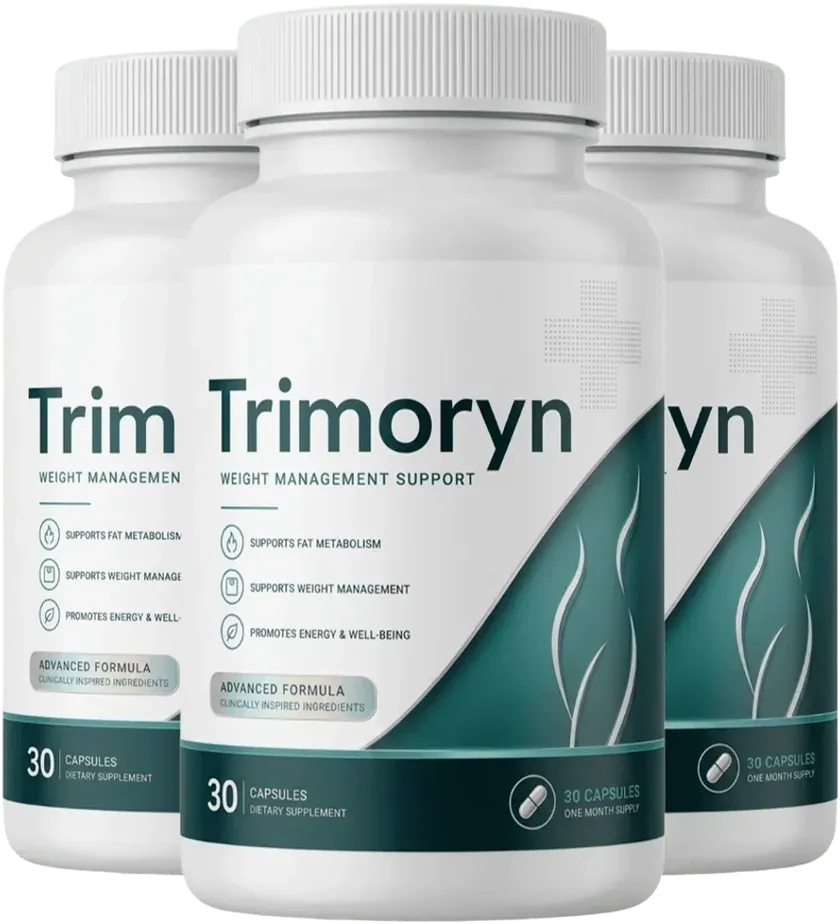
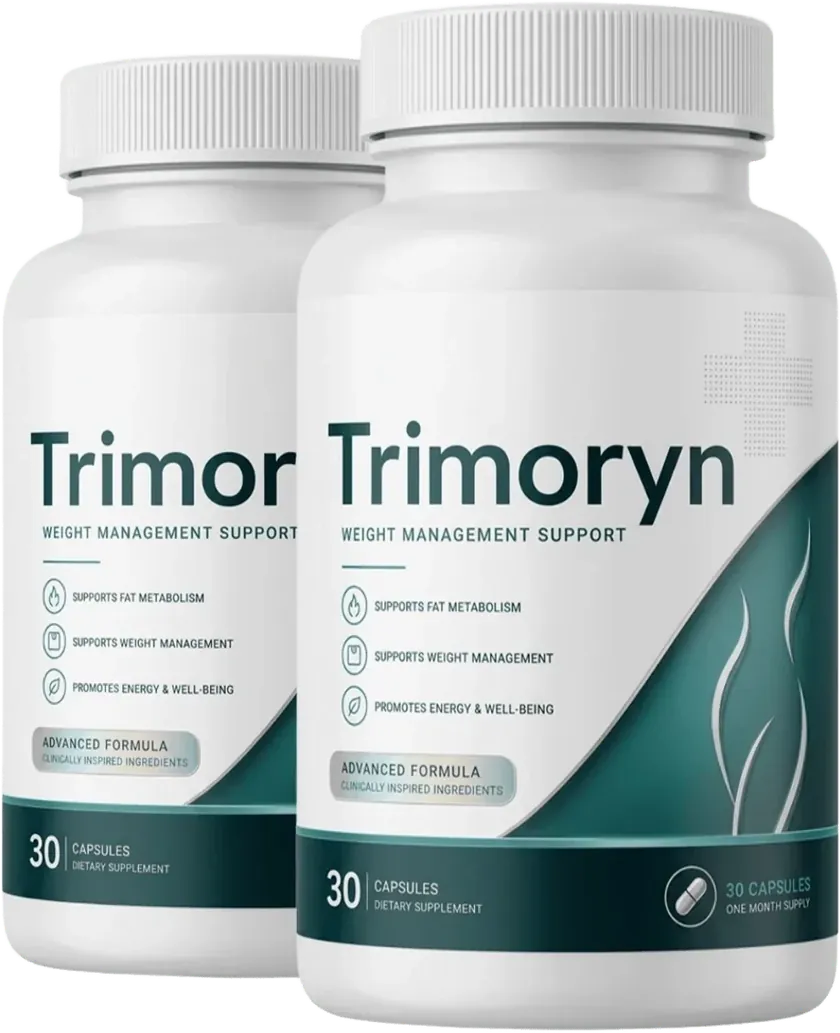
Trimoryn Testing and Quality Marks, Read Correctly
Eight marks appear in the Trimoryn product artwork, and each one describes something specific rather than proving safety or effectiveness. FDA Registered Facility is a factory listing, not an approval. No GMP certificate number, auditor or certifying body is published, and no clinician is named behind Doctor Developed. This page explains each mark and what real third-party testing would look like.
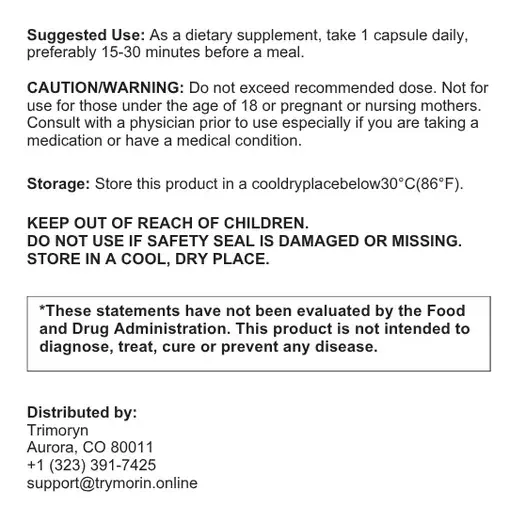
What these eight marks are, before you trust them
Eight small marks sit in the Trimoryn product artwork: a row of icons meant to be read at a glance. Read one by one, most of them turn out to describe something narrow and specific, not to certify the whole product the way a glance suggests.
None of that makes the marks false. It means a mark is a shorthand for a claim, and the claim is worth reading in full rather than trusting the icon on its own.
Two of the eight sit outside this page entirely. The 60-Day Money Back mark is a purchase policy, covered in full on the guarantee page, and the Vegetarian mark checks out against the label's own Other Ingredients line: the capsule shell is hypromellose, a plant cellulose, listed on the Supplement Facts page. The other six are the ones worth slowing down for, and they get the full treatment below.
Every mark in the artwork, and what it actually covers
FDA Registered Facility
The plant is on the FDA facility register. Registration is a listing, not an approval, and Trimoryn is not FDA-approved.
GMP Certified
Good Manufacturing Practice rules are claimed for the plant. No certificate number or auditing body is printed next to the mark.
Non-GMO
A non-GMO mark used in the product art. No certifying organisation is named beside it.

Vegetarian
The capsule shell is hypromellose, a plant cellulose, which matches a vegetarian claim. No certifier is named.

Gluten Free
A gluten-free mark from the product art. The label itself prints no allergen statement and no ppm threshold.
Dairy Free
A dairy-free mark from the product art. Again, no allergen line is printed on the bottle itself.

Doctor Developed
A marketing mark. No clinician is named anywhere in the material we were given, so treat it as unverified.

60-Day Money Back
A purchase promise from the sales page, not a health promise. Return postage is on the buyer.
FDA Registered Facility, read correctly
The FDA maintains a register of facilities that manufacture, process or hold food and dietary supplements in the United States. Registering on that list is a paperwork requirement for operating at all, not a review of any specific product, and it does not mean the FDA tested, approved or endorsed Trimoryn.
No dietary supplement carries FDA approval, because supplements are regulated differently from prescription drugs: the agency does not review a formula before it reaches a shelf. A facility registration confirms the plant is on file. It says nothing about what came out of it in any particular batch.
Reading “FDA Registered Facility” as “FDA approved” is the single most common mix-up with a mark like this one, and it is worth correcting plainly rather than letting the icon do the talking.
GMP Certified, and the other marks with no certifier named
GMP Certified: a claim with no certificate attached
Good Manufacturing Practice, or GMP, describes a set of quality rules for how a facility handles ingredients, cleans equipment, documents batches and trains staff. A genuine GMP certification is normally issued by a named third-party auditor, dated, and tied to a certificate number the facility can produce on request.
None of that appears in the material behind this mark. No auditor is named, no certificate number is printed, and no date of certification is given anywhere we can see. The claim may well be true; we simply cannot verify it from what we were given, and we are not going to present an unverifiable claim as a confirmed one.
The same gap applies to the Non-GMO, Gluten Free and Dairy Free marks in the artwork: each is a claim used in the product art, and none names the organization behind it.
Doctor Developed: no clinician is named
“Doctor Developed” is a marketing phrase, and no clinician is named anywhere in the material we were given. No name, no credential, no specialty, nothing that would let a reader look the person up.
We are not saying no doctor was ever involved. We are saying that in the absence of a name, this site has no way to confirm one was, and inventing a name or a credential to fill that gap is exactly the kind of thing this desk will not do. The mark stays unverified rather than fabricated.
| Mark | What it would take to verify it |
|---|---|
| Doctor Developed | A named clinician, their credential, and some description of what “developed” meant in practice |
| GMP Certified | A named certifying body, a certificate number, and a date |
| Non-GMO | A named certifying organization and a certificate or verification number |
| Gluten Free / Dairy Free | An allergen statement on the label itself, with a stated threshold, not only an icon in the artwork |
What third-party testing would look like if it existed here
Real third-party testing leaves a paper trail that anyone can follow, not just an icon. Here is what that trail looks like when it exists.
An independent, accredited lab runs the tests
Not the manufacturer's own quality team. ISO/IEC 17025 accreditation is the standard baseline for a lab whose results are meant to be trusted outside its own walls.The test is tied to one specific lot
A result for “the product” in general is far weaker than a result for the exact batch on your shelf, identified by its lot number.The certificate covers identity, potency and contaminants
What the ingredient actually is, how much of it is really there against the label claim, and screens for heavy metals and microbial contamination.The certificate is easy to find
Ideally linked from the product page itself, not something you have to request and wait on. A company confident in its results rarely hides them.
What's answered, and what still isn't
| Question | This artwork answers it? | What would answer it fully |
|---|---|---|
| Is the facility on the FDA's list? | Yes, a registration is claimed | Nothing more needed; a listing is a listing |
| Is the product FDA approved? | No, and no mark here claims it is | Not applicable; no supplement is FDA-approved |
| Does an outside body certify GMP compliance? | Claimed, not shown | A named auditor, certificate number and date |
| Was a doctor involved in formulating this? | Claimed, not shown | A named clinician and credential |
| Has a lab tested this specific batch for potency and contaminants? | Not shown by any mark here | A certificate of analysis tied to the lot on the bottle |
The lot and certificate references printed for this product have their own gap, covered in full on the batch verification page: they are draft references, not a lab result.
Why the gap between a mark and a proof matters
- A registered facility can still produce an inconsistent batch; registration is not a quality test.
- An unnamed GMP claim cannot be checked against a real audit, so treat it as a claim, not a confirmed fact.
- An unnamed clinician behind Doctor Developed cannot be asked what, specifically, they developed.
- None of the eight marks, alone or together, is a substitute for a lot-specific certificate of analysis.
Marks like these exist across the supplement industry, not only on this bottle. Learning to read what one actually promises, separate from what the icon implies at a glance, is useful well beyond this one product.
It also matters because a reader who assumes the marks already cover everything has less reason to check the things that actually carry a printed number: the amount of each ingredient, and the interactions that come with them. Those live on the ingredients page and the side effects page, and neither one depends on an icon to make its case.
Testing & Quality: common questions
Is Trimoryn FDA approved?
No. No dietary supplement is FDA-approved. The FDA Registered Facility mark means the plant is on the FDA's facility list, which is a listing, not a product approval.
Is Trimoryn GMP certified?
The artwork claims it, but no certificate number, auditor or certifying body is published, so we cannot verify the claim from the material we have.
Who is the doctor behind “Doctor Developed”?
No clinician is named anywhere in the material we were given. We treat the mark as an unverified marketing claim rather than invent a name to fill the gap.
Does Non-GMO mean an outside lab tested for GMOs?
It means the mark appears in the product art. No certifying organization is named beside it, so it should be read as a claim, not a lab-verified result.
Does Gluten Free mean the label carries an allergen statement?
No. The label itself prints no allergen statement or parts-per-million threshold. The mark comes from the product artwork alone.
Has Trimoryn been tested by an independent lab?
We have not been given a certificate of analysis tied to a specific batch. See the batch verification page for what that gap looks like in detail.
What would make these marks trustworthy?
A named certifying body and certificate number for GMP and Non-GMO, a named clinician for Doctor Developed, and a lot-specific certificate of analysis from an accredited lab.
Keep reading
Is the batch reference real lab proof?
Why the printed lot and CoA numbers are draft references, not results.
Read →What is actually in one capsule?
Every one of the eleven printed amounts, identified plainly.
Read →Who publishes this site, exactly?
Mytrimoryn's role, the editorial rules and why no reviews are published.
Read →Order Trimoryn from the authorized retailer
60 servings per bottle, 1 to 2 droppers a day. Kits of 2, 3 or 6 bottles run from $49 a bottle on the sales page, with a 60-day money-back guarantee. Questions first? Call +1 (323) 391-7425.