What 4:1 and 10:1 Extract Ratios Actually Mean
A 10:1 extract means ten parts of the raw plant were reduced to one part of finished powder, so 100 mg of Trimoryn's 10:1 cinnamon stands in for roughly a gram of bark. Standardization is a different statement: it names one compound and its percentage inside the extract. Ratios and standardization answer different questions, and neither one tells you whether the final amount matches a research dose.
Two different numbers, and why they get confused
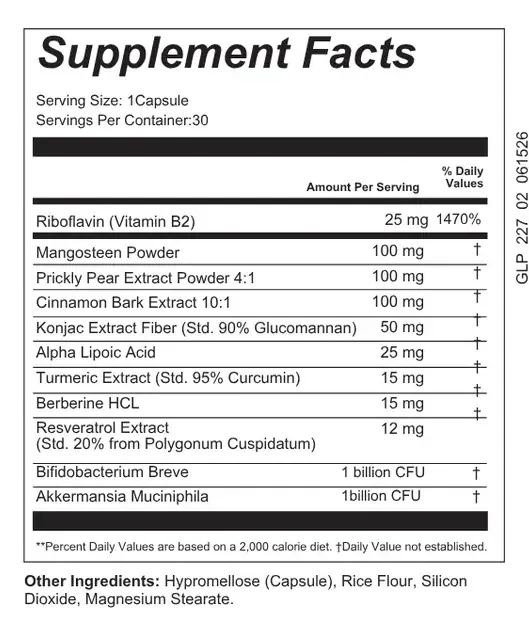
Two numbers on a supplement panel look almost identical and mean different things. A colon ratio like 10:1 describes how concentrated an extract is. A percentage after the word "Std." describes how pure one named compound is inside that extract. Trimoryn's own panel carries both kinds, on different lines, and mixing them up is the easiest way to misread a label.
This guide takes them one at a time, using the exact lines printed on the Trimoryn bottle as the worked examples, then shows the arithmetic so you can run it yourself on any other supplement.
What a colon ratio like 10:1 actually says
| Line, as printed | Ratio | What it means |
|---|---|---|
| Prickly Pear Extract Powder 4:1, 100 mg | 4:1 | Four parts raw cactus pad and fruit were reduced to one part of this powder |
| Cinnamon Bark Extract 10:1, 100 mg | 10:1 | Ten parts raw cinnamon bark were reduced to one part of this extract |
A ratio is a concentration factor, not a dose and not a quality score. Making an extract usually means soaking or pressing the raw plant material, then driving off the water and bulk fiber so what is left carries more of the plant's compounds per gram. A 10:1 extract took ten units of raw plant to make one unit of powder; a 4:1 extract took four units to make one.
That single fact lets you reverse the math: if you know the finished weight and the ratio, you can work out roughly how much raw plant it represents. Trimoryn's panel gives you both numbers on every extract line, which is not true of every supplement panel on the shelf.
How to do the raw-plant arithmetic yourself
The arithmetic itself takes one step. Multiply the finished weight on the panel by the first number in the ratio, and you have a rough raw-plant equivalent. The second number in the ratio is almost always 1, meaning the finished product is what one part of raw plant became.
| Line | Finished weight | Ratio | Raw-plant equivalent |
|---|---|---|---|
| Cinnamon Bark Extract 10:1 | 100 mg | 10:1 | 100 mg × 10 = 1,000 mg (about 1 g) of bark |
| Prickly Pear Extract Powder 4:1 | 100 mg | 4:1 | 100 mg × 4 = 400 mg of raw cactus pad and fruit |
Run that on Trimoryn's own cinnamon line and something notable happens: Deyno et al., 2019 pooled trials using cinnamon doses mostly in the 1 to 6 gram a day range, and 100 mg of a 10:1 extract lands right at the bottom of that range once converted back to raw bark. That is the one line on this panel where the ratio math actually reaches a studied amount, which is worth saying plainly rather than only listing the shortfalls elsewhere on this label.
The prickly pear line does not land as favorably. Its raw-plant equivalent, about 400 mg, sits far below the amounts used in most of the trials Gouws et al., 2019 reviewed, and a separate meta-analysis, Onakpoya et al., 2015, pooling 382 participants across 5 trials, found no significant effect on body weight at the doses those studies used, doses generally larger than 400 mg.
Standardization: a different statement entirely
Standardization is a purity statement, not a ratio
Three lines on this panel do not carry a colon ratio at all. Instead they carry the word "Std." followed by a percentage: Konjac Extract Fiber (Std. 90% Glucomannan), Turmeric Extract (Std. 95% Curcumin), and Resveratrol Extract (Std. 20% from Polygonum Cuspidatum).
That percentage answers a completely different question from a ratio. It says: of the finished extract weight printed on the panel, this share is the one named active compound. It says nothing about how many grams of raw root or bark went in to make that extract.
Multiply the finished weight by the percentage and you get the amount of the actual named compound, which is usually the number worth comparing to research, not the extract weight itself.
Working out what a standardized line actually delivers
| Line, as printed | Finished weight | Standardized to | Actual compound |
|---|---|---|---|
| Konjac Extract Fiber (Std. 90% Glucomannan) | 50 mg | 90% | 45 mg glucomannan |
| Turmeric Extract (Std. 95% Curcumin) | 15 mg | 95% | about 14 mg curcumin |
| Resveratrol Extract (Std. 20% from Polygonum Cuspidatum) | 12 mg | 20% | about 2.4 mg resveratrol |
Look at the gap between the printed weight and the actual compound weight on the resveratrol line: 12 mg of extract sounds larger than it is once you know only a fifth of it is resveratrol itself. That is not a hidden trick; the panel states the percentage plainly. It just requires one multiplication to turn into the number that matters for comparing against research.
EFSA et al., 2010 is the clearest example of why this step matters: the EU's authorized health claim for glucomannan and weight is written around 3 grams of actual glucomannan a day. This label's 45 mg of actual glucomannan is roughly one sixty-fifth of that amount, a gap that only shows up once the standardization percentage has been applied to the 50 mg finished weight.
The lines that need no conversion at all
Five lines on this panel carry neither a ratio nor a standardization percentage. Riboflavin, mangosteen powder, alpha lipoic acid, berberine HCL, and the two live cultures are printed as plain amounts: a straightforward milligram figure, or CFU for the cultures. There is no conversion step needed for those lines, because the number on the panel is already the number that matters.
Knowing which kind of line you are looking at, plain amount, ratio, or standardized percentage, is the first thing to check before comparing any ingredient to a study. Comparing a 10:1 extract's finished weight directly to a research dose stated in raw herb, without converting either one, is the single most common way this kind of label gets misread.
Where extract ratios and percentages can mislead
A high ratio like 10:1 sounds more concentrated than a low one like 4:1, and in a narrow sense it is. But concentration alone does not tell you the final dose is meaningful. A 20:1 extract at 5 mg is still only 5 mg of finished material, representing 100 mg of raw plant, which can still be far below a research dose stated in grams.
A bigger ratio is not a bigger dose
The ratio describes concentration, not the amount you are actually swallowing. Always check the finished milligram weight on the same line before assuming a high ratio means a strong dose.
A ratio without the raw plant type is incomplete
Trimoryn's cinnamon line does not name the species. A 10:1 ratio converts to roughly a gram of bark either way, but whether that gram is Cassia or Ceylon changes the coumarin picture, and the ratio itself cannot tell you which.
Standardization percentages can shrink a number fast
A 12 mg line standardized to 20% is genuinely 2.4 mg of the named compound. Reading the 12 mg alone, without the percentage, overstates the dose by five times.
All five converted lines, side by side
Put every converted line side by side and the picture Trimoryn's label prints becomes easier to judge in one glance. This is the same information as the earlier tables, just gathered in one place with the research amount alongside it.
| Ingredient | As printed | Converted amount | Amount used in research |
|---|---|---|---|
| Cinnamon Bark Extract 10:1 | 100 mg | ≈1,000 mg raw bark | 1,000–6,000 mg/day Deyno et al., 2019 |
| Prickly Pear Extract Powder 4:1 | 100 mg | ≈400 mg raw plant | varied, generally larger Onakpoya et al., 2015 |
| Konjac Extract Fiber (Std. 90%) | 50 mg | ≈45 mg glucomannan | 3,000 mg/day EFSA et al., 2010 |
| Turmeric Extract (Std. 95%) | 15 mg | ≈14 mg curcumin | 500–1,000 mg/day Hewlings et al., 2017 |
| Resveratrol Extract (Std. 20%) | 12 mg | ≈2.4 mg resveratrol | 150–500 mg/day Zahoor et al., 2024 |
Cinnamon is the outlier in the right column, landing inside the studied range once converted. The other four sit well below theirs, sometimes by a factor of dozens. None of that means those four ingredients do nothing; it means the amount on this panel is not the amount the cited research tested. The full ingredient-by-ingredient breakdown, with every dose comparison drawn out, lives on the ingredients page and how it works.
A four-step checklist for reading any ratio label
Find the number type
Look for a colon (10:1), the word Std. with a percentage, or a plain milligram or CFU figure. Each needs a different next step.For a ratio, multiply by the first number
100 mg at 10:1 becomes about 1,000 mg of raw plant. That raw-plant figure is what a traditional herbal dose is usually stated in.For a standardization percentage, multiply by that percentage
50 mg at Std. 90% becomes 45 mg of the actual named compound. That compound figure is usually what a clinical trial dose is stated in.Compare the converted number, not the printed one, to research
Comparing 100 mg of extract directly to a 1,000 mg herbal dose, without converting, understates how the ingredient was actually studied, or overstates it if you skip the standardization step.
Extract Ratios Explained: common questions
What does a 10:1 extract ratio mean?
It means ten units of raw plant were reduced to make one unit of the finished extract. Multiply the finished weight by 10 to estimate the raw-plant equivalent.
Is a 10:1 extract stronger than a 4:1 extract?
Per gram, yes, it is more concentrated. But the final dose still depends on how many milligrams of the finished extract are actually in the capsule, which you have to check separately.
How much raw cinnamon bark is in Trimoryn's cinnamon line?
About 1,000 mg, or roughly a gram, once the 100 mg at 10:1 is converted back to a raw-plant equivalent.
What does Std. 90% Glucomannan mean?
It means 90% of that 50 mg konjac extract line is actual glucomannan fiber, or about 45 mg. The rest of the extract weight is other plant material.
Is standardization the same thing as an extract ratio?
No. A ratio describes how concentrated the extract is versus the raw plant. Standardization describes what share of the finished extract is one named compound.
Why does Trimoryn's cinnamon land closer to a research dose than its other extracts?
Because a 10:1 ratio converts a small printed weight into a much larger raw-plant equivalent, close to the low end of the 1 to 6 gram range studied for cinnamon.
Can a high ratio number still mean a low actual dose?
Yes. The ratio only describes concentration. A small finished weight at a high ratio can still convert to less raw plant than a larger finished weight at a lower ratio.
Where can I see every Trimoryn ingredient converted this way?
The comparison table on this page covers the five ratio and standardized lines. The ingredients page and how it works page cover all eleven lines individually.
Keep reading
Order Trimoryn from the authorized retailer
60 servings per bottle, 1 to 2 droppers a day. Kits of 2, 3 or 6 bottles run from $49 a bottle on the sales page, with a 60-day money-back guarantee. Questions first? Call +1 (323) 391-7425.