Who Is Trimoryn For? The Label's Rule
Trimoryn is for adults 18 and over, and not for anyone pregnant or nursing.
It is marketed to women over 40, but that is a target audience, not a label rule. Anyone on glucose-lowering, blood-pressure or blood-thinning medication should ask a clinician first because of berberine.
Who the label itself rules out
What the bottle actually restricts
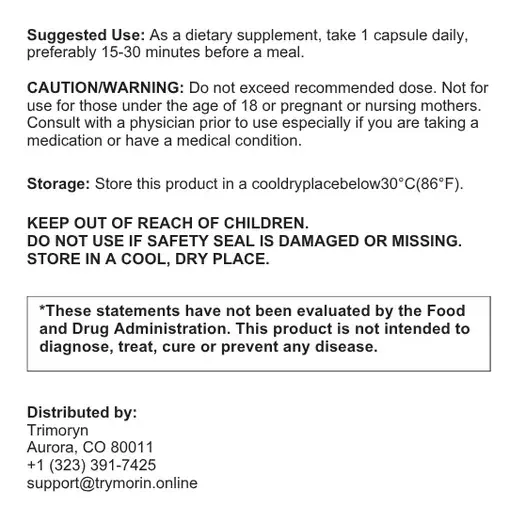
The caution on the back of the bottle is short and specific: “Not for use for those under the age of 18 or pregnant or nursing mothers.” Everyone else is told to consult a physician first if they take medicine or have a medical condition, not barred outright.
That is the entire eligibility rule the label prints. There is no upper age limit, no sex-based restriction, and no line naming any particular health goal as a requirement to buy it.
Everything past that point, including who a marketing page pictures on its banner, is a business decision about who to advertise to, not a medical boundary set by the manufacturer.
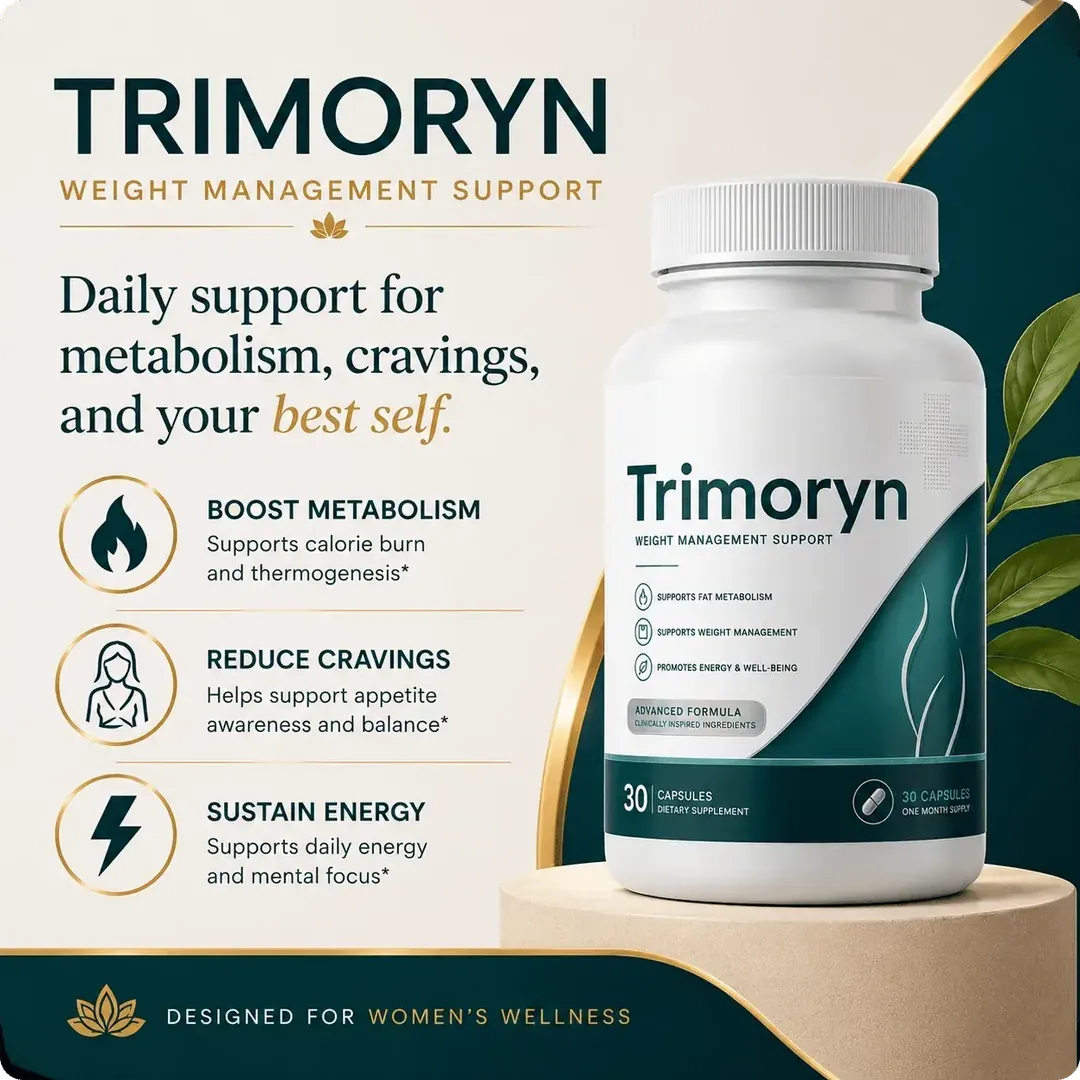
“Women 40+” is a marketing target, not a label restriction
The sales page title reads: “Trimoryn | Metabolism Gut Health for Women 40+”
That phrase names an audience a marketing team picked, not a clinical population the ingredients were tested on. Nothing about the formula changes for a 40-year-old versus a 25-year-old or a 60-year-old, and nothing about it is chemically different for a woman than a man. The panel is the same 442 mg in every bottle sold under any headline.
| What it says | What it actually means |
|---|---|
| Trimoryn | Metabolism Gut Health for Women 40+ | A marketing headline aimed at a specific customer profile. |
| “Women 40+” | A target demographic for ad spend, not a label eligibility rule. |
| “Adults 18 and over” (label caution) | The actual restriction printed on the bottle, and the only age line that matters. |
A 22-year-old man and a 55-year-old woman are both, per the label, in the eligible group. Whether either one should take it depends on the health questions below, not on which banner brought them to the page.
Who this product suits
None of the ingredients on this panel are formulated around a specific decade of life or a specific hormonal stage. The nine weighed lines and two live cultures are the same 442 mg whether the bottle reaches a 24-year-old or a 64-year-old, and the research cited on this site for each ingredient was, in almost every case, run on mixed-age adult volunteers rather than any single age band.
A once-daily routine, not a regimen
One capsule, one time a day, rather than a powder to mix or several pills spread through the day. People who want the smallest possible daily task tend to suit this format.
Someone who reads the panel
Every one of the eleven ingredients carries its own printed amount. That suits a reader who wants to see the number rather than trust a blend total.
A two-to-three-month timeline
The ingredients here are studied over eight to twenty-four weeks in the literature behind them. A person planning to judge results inside two weeks will be disappointed regardless of the formula.
A good fit also means someone who already has food, sleep and movement roughly in place, and is looking for something small alongside those, rather than a substitute for any of them. The capsule adds one habit to a day; it does not replace the habits that move the numbers most.
Who should ask a clinician before starting
Anyone on glucose-lowering medicine
Berberine, alpha lipoic acid and cinnamon have all been studied for lowering blood sugar. Stacked on insulin, metformin or a sulfonylurea, that combination is a hypoglycemia question a clinician should weigh in on first.
Anyone on a narrow-margin prescription
Berberine affects CYP450 enzymes and P-glycoprotein, the systems that clear a long list of medicines from the body. That makes it worth a pharmacist's or doctor's review before day one MotherToBaby et al., 2023.
Anyone with liver disease in their history
Turmeric extracts have a small but documented liver-injury literature, and cassia-type cinnamon carries a coumarin load the label does not identify. Neither is a reason to panic, but both are reasons to mention it.
Anyone who is immunocompromised
The two live cultures on this panel are generally well tolerated, but anyone seriously ill or immune-suppressed should check with a doctor before adding any live-culture supplement.
None of this is a diagnosis. It is a shortlist of the exact questions a clinician can answer in one visit. The full interaction detail sits on the side effects page, and the order desk on +1 (323) 391-7425 can only answer questions about an order, not about your health.
Who must not take Trimoryn
- Pregnant. The caution names this directly, and berberine specifically carries a documented kernicterus risk in newborns.
- Nursing. The same caution line applies, and berberine passes into breast milk in amounts that have not been measured.
- Under 18. The label states this plainly; no version of this formula is intended for anyone younger.
Where the rest of this page describes people who should have a conversation first, these three groups are ruled out by the label itself. There is no dose adjustment or timing change that puts any of them back in the eligible group.
The pregnancy and nursing exclusions are not a generic caution copied onto every supplement label. A fact sheet on berberine specifically warns that it can change how bilirubin binds to albumin, raising the risk of bilirubin building up in a newborn’s brain, a condition called kernicterus MotherToBaby et al., 2023. That single ingredient, at 15 mg, is reason enough for the exclusion on its own, even before the rest of the formula is considered.
How to decide, in four steps
Read the caution line yourself
Do not take a summary’s word for it. The photo on the Supplement Facts page shows the exact wording printed on the bottle.
List your current medicine and conditions
Write down anything you take for blood sugar, blood pressure, clotting, or liver function before the appointment, not during it.
Bring that list to a pharmacist or doctor
Ask specifically about berberine, alpha lipoic acid and cinnamon, since those three are the ones most likely to interact with existing medicine.
Decide with a two-to-three month window in mind
If the answer is yes, plan to judge it on the timescale the research uses, not the timescale the sales page implies.
The label rule and the marketing audience, mapped out
The table below lines up the two lists so the gap is easy to see at a glance, rather than buried in separate paragraphs on separate pages.
| Group | What the label says | What the sales page implies |
|---|---|---|
| Women, 40 and over | Nothing specific; covered under “adults 18+” | The named target audience in the sales page title |
| Men of any age | Covered under “adults 18+” | Not pictured or named, but not excluded either |
| Adults 18-39 | Covered under “adults 18+” | Not the named audience, still eligible by the label |
| Under 18 | Explicitly excluded | Not addressed; the label rule stands regardless |
| Pregnant or nursing | Explicitly excluded | Not addressed; the label rule stands regardless |
Why the marketing-versus-label gap is worth noticing
Why the distinction is worth making
A marketing headline aimed at one group can make everyone outside it assume the product was not built for them, or worse, make someone inside the target audience assume the label has already checked their eligibility for them. Neither assumption is safe.
The label’s caution line is the only eligibility test that actually applies, and it is short enough to read in ten seconds: adults 18 and over, not pregnant, not nursing. Everything past that is a conversation with a clinician about your own medicine and history, not something a headline can settle.
The full picture of what is in the capsule, and how those amounts compare with research, is on the ingredients page.
Who It's For: common questions
Is Trimoryn only for women over 40?
No. The label says adults 18 and over with no sex restriction. “Women 40+” appears only in the sales page title as a marketing target.
Can a man take Trimoryn?
Yes, per the label's own eligibility rule of adults 18 and over. The marketing audience does not change the formula or the caution line.
Can I take it if I'm pregnant?
No. The label states plainly it is not for use by anyone pregnant, and berberine carries a documented risk to a newborn.
Can I take it while breastfeeding?
No. The same caution line rules this out, and berberine is known to pass into breast milk in amounts that have not been measured.
Is there an age limit?
The label sets 18 as the minimum. No maximum age is printed anywhere on the bottle.
I take medicine for blood pressure. Should I ask first?
Yes. Ask your clinician before day one, since several ingredients here act on blood sugar and could interact with cardiovascular medicines.
Does 40+ mean the ingredients target menopause or hormones?
No. Nothing on the label or the panel is hormone-specific; the phrase describes the intended shopper, not a formulated use case.
Who should never take this without medical advice first?
Anyone on glucose-lowering, blood-thinning or narrow-margin prescription medicine, and anyone with a liver condition or a compromised immune system.
Keep reading
How to Take Trimoryn
Dose, timing and the water rule, plus what to do about a missed day.
Read →Side Effects and Interactions
The full interaction list, led by berberine, alpha lipoic acid and cinnamon.
Read →What Is Actually in the Capsule
All eleven printed amounts, and the five the marketing art leaves out.
Read →Order Trimoryn from the authorized retailer
60 servings per bottle, 1 to 2 droppers a day. Kits of 2, 3 or 6 bottles run from $49 a bottle on the sales page, with a 60-day money-back guarantee. Questions first? Call +1 (323) 391-7425.