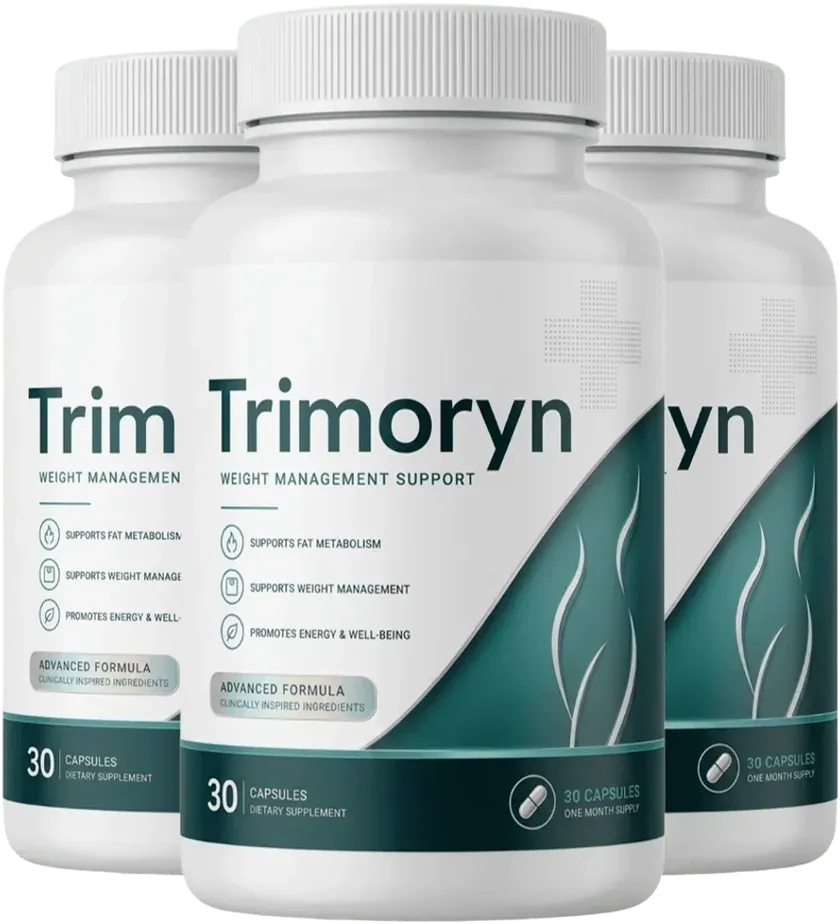
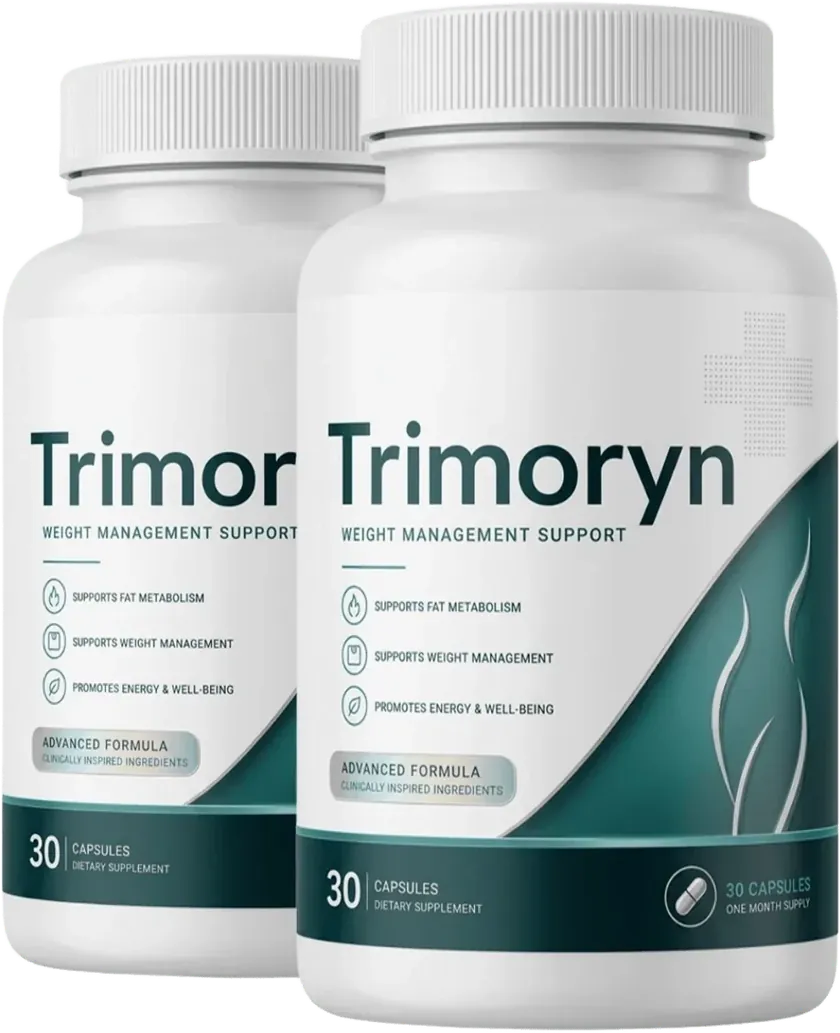
Trimoryn Side Effects and Who Should Check First
Trimoryn's main cautions come from a few ingredients, and berberine is the one to check first.
Berberine can interact with many prescriptions and is not for pregnancy or breastfeeding. Three ingredients lower blood sugar together, the fibre needs a full glass of water, and riboflavin may turn urine bright yellow.
See who Trimoryn is for.
The safety picture, ingredient by ingredient
This page goes through every safety note we could verify, ingredient by ingredient. None of it means the capsule is dangerous at the printed dose for most healthy adults; it means specific groups of people, and specific combinations with medicine, deserve a conversation with a clinician before the first capsule.
| Ingredient | Main safety note | Check first if you... |
|---|---|---|
| Berberine HCL | Affects CYP450 and P-glycoprotein; ruled out in pregnancy and breastfeeding | Take any prescription medicine, or are pregnant, nursing or under 18 |
| Alpha Lipoic Acid | Can lower blood sugar; rare insulin autoimmune syndrome reported | Take insulin or another glucose-lowering medicine |
| Cinnamon Bark Extract 10:1 | Species not stated; Cassia carries far more coumarin than Ceylon | Have liver disease or take cinnamon-containing products elsewhere |
| Konjac Extract Fiber | Swells in liquid; choking/obstruction risk if taken without water | Have any swallowing difficulty |
| Turmeric Extract (Curcumin) | Rare but documented herb-induced liver injury in the US | Have liver disease or notice fatigue, dark urine or jaundice |
| Riboflavin (Vitamin B2) | Turns urine bright yellow; no established upper limit | Are about to give a urine sample for a lab test |
| Bifidobacterium breve / Akkermansia | Comparatively new ingredients with a shorter safety record | Are immunocompromised or seriously ill |
| Mangosteen Powder | No dedicated safety trial found; past marketing-claims scrutiny elsewhere | Are relying on it for a specific medical effect |
Berberine: enzymes, a drug pump, and pregnancy
Berberine inhibits CYP450 enzymes and P-glycoprotein, the two systems that clear a long list of common prescriptions from the body. Slowing either one can raise or lower how much of another medicine stays active, which is a question for whoever prescribes it, not for this page.
MotherToBaby et al., 2023 is specific about pregnancy and breastfeeding: berberine can change how bilirubin binds to protein in the blood, and in a newborn that can let bilirubin build up in the brain, a condition called kernicterus, with a risk of permanent brain damage. That is why the label rules out use in pregnancy and nursing, and it is one of the clearest, most specific warnings behind any ingredient on this panel. Dong et al., 2012 separately reports no serious adverse effects in the trials it pooled, but those trials used doses far above this label's 15 mg and were not designed to test drug interactions.
Three ingredients, one direction: blood sugar
Berberine is not the only ingredient here that moves blood sugar. Alpha lipoic acid and cinnamon both do too, through different routes, and all three sit in the same fifteen- to one-hundred-milligram range on this panel.
- Dong et al., 2012: berberine enhanced glycemic control when added to standard diabetes medicine in the trials reviewed.
- Deyno et al., 2019: cinnamon significantly lowered fasting glucose across 16 pooled trials.
- Fogacci et al., 2020: alpha lipoic acid was not linked to excess adverse events across 71 trials, but ALA can still lower blood sugar and case reports describe rare, serious hypoglycemia from it.
Individually, three ingredients working in the same direction at modest doses is not automatically dangerous. Combined with insulin, metformin or a sulfonylurea, the added, cumulative pull on blood sugar is exactly the kind of thing a clinician should know about before you start, not after a reading comes back low.
Konjac fiber and water: a real, low-cost precaution
Glucomannan needs a full glass of water, not a sip
Health et al., 2010 is a 2010 government advisory, not a rumor: glucomannan tablets, capsules or powders can swell enough to pose a choking or blockage risk in the throat, esophagus or intestine if they are not taken with at least 8 ounces of water, and the advisory specifically warns against taking them right before lying down.
This label's amount, about 45 mg of actual glucomannan, is far below the multi-gram doses tied to the case reports behind that warning. EFSA et al., 2010 is the basis for the EU's glucomannan claim, and it is written around 3 g a day in three water-based doses, roughly 65 times this label's amount.
The precaution costs nothing either way: take the capsule upright, with a full glass of water, and skip it if you have any trouble swallowing.
Cinnamon: an unnamed species and a coumarin question
The label reads only "Cinnamon Bark Extract 10:1." It does not say Cassia (Cinnamomum aromaticum) or Ceylon (Cinnamomum verum), and the two are not interchangeable for safety purposes.
| Species | Coumarin content | What this means here |
|---|---|---|
| Ceylon (Cinnamomum verum) | Trace amounts | Would carry little coumarin concern even with prolonged use |
| Cassia (Cinnamomum aromaticum) | Naturally high; can exceed 50 mg/kg in some products | Would make daily coumarin intake relevant to watch |
| This label | Not stated | Cannot be worked out from the bottle either way |
EFSA et al., 2022 reports the European Food Safety Authority set a tolerable daily intake for coumarin of 0.1 mg per kilogram of body weight per day, based on liver toxicity concerns. National Center for Complementary and Integrative Health (NCCIH), 2024 adds that prolonged use of Cassia cinnamon, particularly in concentrated extracts like this one, is worth caution for anyone with liver disease. Cinnamon can also add to the blood-sugar effect described above.
Turmeric: a rare but documented liver-injury note
LiverTox (National Institute of Diabetes and Digestive and Kidney Diseases), 2023 identifies turmeric and curcumin as the most common cause of clinically apparent herb-induced liver injury reported in the United States in recent years. The estimated incidence is still very rare, roughly 1 in 10,000 to 1 in 100,000 users, and most cases resolve within a few months of stopping.
Cases are disproportionately linked to high-bioavailability formulations, curcumin combined with piperine or delivered through a lipid or nanoparticle system, and to a genetic variant called HLA-B*35:01, present in over 70% of cases versus 10 to 15% of the general population. National Center for Complementary and Integrative Health (NCCIH), 2024 advises stopping use and seeking care for fatigue, nausea, dark urine or jaundice. This label's 15 mg of turmeric extract is not stated to include piperine or another absorption enhancer, which likely limits both how much curcumin reaches the bloodstream and this particular risk, without removing it entirely.
The rest of the safety picture
Alpha lipoic acid and hypoglycemia
Fogacci et al., 2020 found no excess adverse events across 71 trials, but rare case reports describe insulin autoimmune syndrome, a cause of dangerous low blood sugar, generally at higher doses than this label's 25 mg.
Riboflavin and yellow urine
National Institutes of Health, 2024 confirms no Tolerable Upper Intake Level has been set for riboflavin. Cleveland et al., 2024 adds that bright yellow urine is the expected, harmless sign of the excess leaving the body.
The two live cultures
EFSA et al., 2021 concluded pasteurized Akkermansia is safe for use in food supplements under the conditions it assessed. As with any live culture, anyone immunocompromised or seriously ill should check with a doctor first.
Mangosteen's marketing history
No dedicated safety trial of mangosteen supplementation could be verified. ConsumerLab.com et al., 2006 documents a 2006 FDA warning letter over unapproved disease claims made for a mangosteen juice product, a marketing concern rather than proof the plant itself is unsafe.
Before you start, or before you combine it with anything else
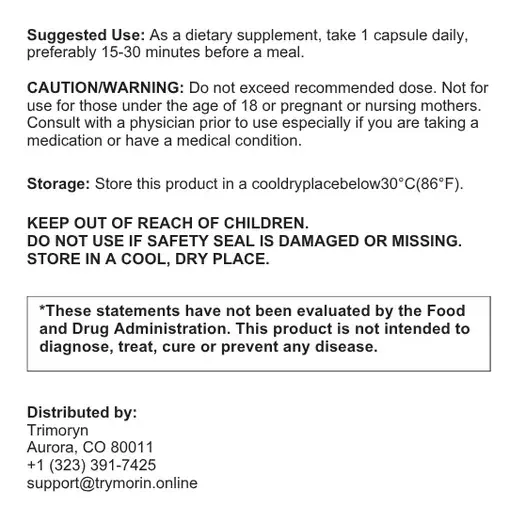
- Pregnant, breastfeeding, or under 18: the label rules this out on its own, mainly because of berberine.
- On any glucose-lowering medicine: ask before the first capsule, since three ingredients here can add to that effect.
- On a blood thinner, an immunosuppressant, or anything with a narrow safe range: berberine's effect on CYP450 and P-glycoprotein is a real question to raise.
- Liver disease in your history: both turmeric and an unstated Cassia cinnamon have their own liver notes.
- Immunocompromised or seriously ill: check before adding any live-culture probiotic, including the two here.
National Institutes of Health, 2023 warns that weight-loss supplements as a category have little supporting evidence and are rarely tested as finished products. Trimoryn is not a weight-loss drug and not a diabetes treatment. Keep taking any prescribed medicine as directed, and call your clinician, not this website, with a medical question.
For anything about an order itself, the desk answers at +1 (323) 391-7425. For the amounts behind every ingredient named on this page, see the ingredients page, and for the mechanism each one is studied for, see how Trimoryn is meant to work.
Side Effects: common questions
What is the biggest interaction risk in Trimoryn?
Berberine. It affects CYP450 enzymes and P-glycoprotein, which clear many common medicines, and it is ruled out in pregnancy and breastfeeding.
Can I take Trimoryn with diabetes medicine?
Ask your prescriber first. Berberine, alpha lipoic acid and cinnamon can all lower blood sugar, and the combined effect with medicine needs medical supervision.
Why does the konjac fiber need a full glass of water?
Glucomannan swells in liquid. Without enough water, it carries a documented choking and blockage risk, even though this label's amount is small.
Is the cinnamon in Trimoryn Cassia or Ceylon?
The label does not say. That matters because Cassia carries much more coumarin than Ceylon, and coumarin has a set tolerable daily intake.
Can turmeric cause liver damage?
Rarely. Turmeric and curcumin are linked to a small number of documented liver injury cases in the US, most tied to high-bioavailability formulations this label does not appear to use.
Is yellow urine from riboflavin dangerous?
No. It is the expected, harmless sign of a water-soluble vitamin leaving the body once the need for it is met.
Is Trimoryn safe for someone who is immunocompromised?
Check with a doctor first. The two live cultures are generally considered safe, but anyone immunocompromised or seriously ill should confirm before adding a probiotic.
Who should not take Trimoryn at all?
Anyone pregnant, breastfeeding, or under 18. The label states this directly, and berberine's pregnancy risk is one clear reason.
Keep reading
Every ingredient, plainly identified
What each of the eleven lines actually is, and its exact printed amount.
Read →The panel, line by line
Serving size, the dagger symbol, Other Ingredients and the distributor block, explained in order.
Read →What each ingredient is studied for
The mechanism story for every line, and what the printed amount does or does not support.
Read →Order Trimoryn from the authorized retailer
60 servings per bottle, 1 to 2 droppers a day. Kits of 2, 3 or 6 bottles run from $49 a bottle on the sales page, with a 60-day money-back guarantee. Questions first? Call +1 (323) 391-7425.